

What Is a Cash Offer vs. Listing Comparison?
Are you getting flooded with texts and postcards from cash buyers? We hear this from Mankato homeowners every single week. Some of those fast offers might actually make sense for your situation.
Many of them simply leave your hard-earned equity on the table. The only reliable way to know what you are dealing with is to run the numbers.
We help Mankato and South Central Minnesota homeowners sell their houses on the open market for the highest price the home can bring, in a timeline that fits their goals.
Cash sales made up 26 percent of all US home purchases in July 2026 according to the National Association of Realtors. These buyers are definitely out there.
We can put that cash offer next to a realistic open-market sale so you can compare what you actually keep. The cash offer sits on one side, and an estimated market sale sits on the other. Each column subtracts the exact same real-world selling expenses.
This shows you the actual net proceeds instead of just two flashy headline prices.
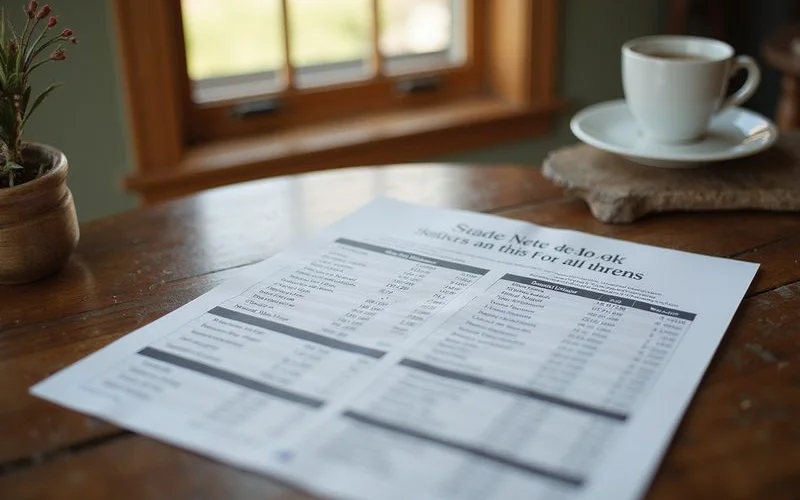
You get to see the exact dollar difference along with the trade-offs in time and certainty. We will tell you if the cash route is actually the better fit for your goals.
This customized comparison is completely free.
What Goes Into Each Column?
Both sides of our net sheet use the same exact line items so the comparison remains completely fair. We pull real data to give you an accurate picture of your potential profits. This prevents any hidden surprises at the closing table.
The Core Sale Figures
- Sale price. This is the cash offer exactly as written. We compare it to an estimated market price from a comparative market analysis of recent NorthstarMLS sales.
- Commission. Real estate fees are negotiable and are not set by law. Cash sales often have none, so we show the agreed listing terms in the open-market column.
- Mortgage payoff statement. Your current lender requires a payoff amount to clear the loan. This balance comes out of either sale method.
State Taxes and Closing Fees
- Minnesota state deed tax. Sellers commonly pay this 0.33 percent tax on the net sale price over $3,000 under Minn. Stat. 287.21.
- Title and closing fees. Settlement and document recording fees come straight from the title company. We factor in the standard Minnesota recording fee, which is strictly $46 per document in 2026. You will also see typical title service fees, which average around $1,005 in our state.
Condition and Timeline Costs
- Itemized repair deductions. This line shows what you would likely fix for a traditional financed buyer. We then contrast that with what the cash buyer is effectively deducting from their price.
- Seller-paid closing costs and concessions. A buyer might ask for financial credits after a home inspection.
- Holding costs. Extra weeks on the market mean paying more mortgage interest, taxes, insurance, and utilities.
You can walk through a detailed breakdown of each specific line item. We explain exactly how to read a seller net sheet in our dedicated guide.
How Do Cash Buyers Calculate Offers?
Most property investors work backward from a number called the after-repair value (ARV). This represents the top price they expect to get once the home is completely fixed and updated. They subtract their estimated repairs, holding costs, selling costs, and a mandatory profit margin. We often see buyers use a common shortcut known as the 70 percent rule. This formula suggests offering roughly 70 percent of the ARV minus all repair costs.
A home worth $300,000 after $25,000 of work lands near a $185,000 cash offer under this formula. This pricing strategy is not a scam at all. It simply reflects how a business takes on financial risk to make a profit. We point this out because it perfectly explains why the gap between a cash offer and a market sale is often larger than sellers expect. You can learn more about how cash home buyers calculate offers to see the math in action.
Types of Buyers Who Make Fast Offers
Different buyers operate with very different business models and risks. We break down the most common groups you will encounter in Mankato. This helps you understand who is actually writing the contract.
| Buyer type | How they work | What to watch |
|---|---|---|
| Local investor | Buys, repairs, resells, or rents the property. | Watch for inspection exits or price drops requested after the final walkthrough. |
| Wholesaler | Contracts the home and then assigns that contract for a fee. | Look for “and/or assigns” language and very small earnest money deposits. Assignment fees can sometimes reach $5,000 to $10,000. |
| Instant-offer platform (iBuyer) | Generates an algorithm offer plus a required service fee. | Expect mandatory repair deductions after their inspection. These companies also typically charge a 5 percent service fee. |
| HomeLight Simple Sale and similar | Operates a marketplace connecting you with cash buyers. | Compare their transaction fees and your final net proceeds against the initial headline price. |
| Open-market buyer, as-is listing | Uses traditional financing or cash to compete with others. | Keep an eye on strict lender requirements and mandatory bank appraisals. |
You might want to explore how the big tech platforms compare to traditional real estate services. We cover the specific details of instant-offer platforms vs. a listing agent to help you decide.
The Contract Matters as Much as the Price
A massive offer tied to a loose contract is often worth less than a slightly lower offer that is incredibly firm. We always review the fine print to protect your interests. The terms dictate your actual security in the deal.
Key Contract Elements to Verify
You need to look closely at several specific clauses before signing anything. We focus on these critical areas during our review.
- Proof of funds. A recent bank statement or formal letter proves the buyer actually has the cash to close.
- Earnest money deposit. This shows how much money is at risk and when it becomes completely non-refundable. We usually like to see an earnest money deposit of 1 to 3 percent of the purchase price here in Minnesota.
- Inspection contingency. This dictates how many days the buyer has to walk away or renegotiate the deal.
- Financing contingency. Some self-proclaimed “cash” buyers actually still plan to borrow the funds.
- Assignment and cancellation clauses. This language determines whether the buyer can sell their contract to a third party or arbitrarily drop the agreed price later.
- Closing date versus possession date. This timeline confirms exactly when you get paid and when you must hand over the keys.
Title defects and outstanding liens will definitely affect both selling paths. We flag those issues early and coordinate directly with the title company to keep things moving smoothly. The full checklist of Questions to ask a cash home buyer provides even more ways to protect yourself.
When Is a Cash Sale the Better Fit?
Cash can absolutely be the right answer for certain situations. We often see homeowners choose certainty over maximum profit when specific challenges arise. Fast closings solve a lot of stressful problems.
Common Scenarios for Cash Offers
Sometimes the condition of the property or your personal timeline makes a traditional listing too difficult. We recommend cash sales when dealing with these major hurdles.
- The home needs major structural work that a traditional bank lender will not accept. A failed septic system, severe foundation movement, or a gutted kitchen are prime examples. For context, a full septic system replacement in Minnesota costs between $10,000 and $25,000 according to 2026 data from Communities Unlimited.
- You need a fully guaranteed closing date to start a new job, finalize a divorce settlement, or meet an estate deadline.
- Holding costs are simply too high for your current budget. An empty home sitting vacant through a harsh Minnesota winter drains money fast.
- You absolutely do not want to deal with public showings, and the dollar gap is small enough to comfortably accept.
A small difference on the net sheet might make the cash route totally worth it for the peace of mind. We usually suggest listing as-is on the open MLS if that financial gap is large. This strategy often brings local investors and handy owner-occupants to compete for your property. You can read more about when a cash sale is better or check out our thoughts on selling as-is on the MLS vs. to a cash buyer.
How Long Does Each Path Take?
A direct cash sale can typically close in just one to three short weeks. We look at the open market very differently because of financing delays. Mankato’s median days on market sat at 28 days in August 2026 according to Redfin. Recent Zillow data also shows Mankato homes going to pending status in about 26 days.
You must then add about 30 to 45 days to successfully close with a standard financed buyer. We calculate the cost of those extra weeks directly on your net sheet so you see the real expense. The detailed breakdown of How long it takes to sell a house in Mankato covers every single stage of the process.
What This Comparison Costs
This detailed financial comparison costs you absolutely nothing. We provide this information with zero obligation to list your home with us. Some savvy sellers use this data to negotiate a much better cash price from their current buyer.
Other folks decide to list the property completely as-is on the open market. We also see plenty of sellers simply take the fast cash offer and move on.
Contact us today to get your custom net sheet started. We will run the numbers so you can make your final decision with absolute confidence.