

CMA vs. Appraisal: Which One Do You Need?
Many homeowners with equity ask us to compare a cma vs appraisal before selling. We see this confusion often, as both tools rely on comparable sales to estimate a property’s final value. That initial pricing decision usually separates a quick, profitable sale from one that lingers on the market.
Our goal is to help Mankato and South Central Minnesota homeowners sell for the highest possible price on a timeline that fits their needs. This guide will explain the actual costs, the latest timeline data, and how to choose the right valuation method.
We always suggest starting with the easiest option first.
For most Mankato sellers, the free home value report is the perfect starting point.
What Is a CMA?
A comparative market analysis is a practical pricing tool prepared by a real estate agent to plan a successful sale. We use recent closed, pending, and active listings on the local Multiple Listing Service to find your competitive position.
This report adjusts for differences in square footage, condition, basement finishes, and garage space. Our focus is purely on the current market reality and what buyers will actually pay today.
A standard CMA takes roughly 24 hours to build after a property walkthrough. We provide this service completely free of charge to prospective sellers.
- Prepared by: A licensed real estate agent
- Primary Purpose: Strategic pricing and marketing planning
- Typical Cost: $0 (Ryan’s is free with no obligation)
- Turnaround Time: Usually within 24 hours of a home visit
What Is an Appraisal?
An appraisal is a formal, independent opinion of value created by a licensed appraiser. We see lenders rely heavily on these reports to approve mortgages and ensure the property justifies the loan amount.
These professionals follow strict guidelines, most notably the Uniform Residential Appraisal Report Form 1004. Our recent checks show the national average cost for a single-family home appraisal in 2026 sits around $357 to $400. This fee varies based on the size of the property and its exact location.
According to 2026 data from Rocket Mortgage, a typical appraisal takes anywhere from 6 to 20 days to complete. We find that complex rural properties or unique custom homes often push toward the longer end of that timeframe. These reports are built primarily for banks, courts, and attorneys, rather than for marketing purposes.
- Prepared by: A state-licensed or certified appraiser
- Primary Purpose: Mortgage lending decisions and legal valuations
- Cost to Buyer: Typically $350 to $600
- Turnaround Time: 6 to 20 days on average
Side by Side
| Feature | CMA | Appraisal |
|---|---|---|
| Who prepares it | Real estate agent | Licensed appraiser |
| Main purpose | Set list price, plan the sale | Lending, legal or formal valuation |
| Cost | Usually free | $350 to $600 average |
| Turnaround | About 24 hours | 6 to 20 days |
| Data focus | Active, pending, and closed sales | Strictly closed comparable sales |
| Who relies on it | You and your agent | Lenders, courts, attorneys |
When a CMA Is Enough
Sellers frequently ask, “do I need an appraisal to sell my house?” We answer this by explaining that a CMA provides all the information required for standard real estate sales.
Fannie Mae data reveals that over 90 percent of formal appraisals either confirm or exceed the agreed-upon purchase price.
Our sellers rarely purchase a pre-listing appraisal because the buyer’s lender orders their own anyway. Paying for an appraisal upfront is generally an unnecessary expense for a standard suburban home.
When a Pre-Listing Appraisal Helps
Paying for a formal appraisal before listing makes sense for unique properties or complex legal situations. We suggest bringing in a licensed appraiser when there are very few comparable sales available to establish a baseline.
The typical $400 upfront cost can prevent major pricing mistakes on highly unusual homes. Our team regularly sees five specific situations where a formal pre-listing valuation is highly beneficial.
- Estate Settlements: An independent report establishes a documented value for tax purposes around the date of death. See our guide on inherited and estate home sales for specific details.
- Divorce Proceedings: A neutral appraiser gives both spouses and their legal teams a firm number for negotiations.
- Unusual Properties: Sprawling acreages and luxury custom builds often lack recent comparable sales data.
- Family Transactions: Selling property to a relative requires a fair, documented value to protect everyone involved.
- Co-owner Disputes: A third-party report offers a definitive answer when business partners or siblings disagree on pricing.
We always advise consulting with a local attorney before making definitive decisions in legal or estate scenarios. This proactive step saves time and prevents unnecessary legal friction down the road.
How the Buyer’s Lender Appraisal Works
Once a buyer secures financing and signs a purchase agreement, their lender officially orders the appraisal. We typically see the appraiser schedule a physical property visit within a few days of the accepted offer.
The appraiser reviews the home’s condition, pulls comparable sales, and issues a final value report. Our latest market data shows this whole process takes about 6 to 20 days from start to finish.
If the final valuation meets or exceeds the contract price, the buyer’s loan moves forward without a hitch. We know that if the number falls short, the bank will only approve a loan based on that lower appraised value.

When the Appraisal Comes in Low
Low appraisals can occur, especially in rapidly shifting markets or neighborhoods with very few recent sales. We often remind sellers that 2026 Fannie Mae research shows appraisals come in below the contract price only about 8 percent of the time.
A low number does not automatically mean the transaction is dead. Our agents immediately look at several practical options to keep the sale moving forward.
- Renegotiate the price to match the new appraised value or find a middle ground.
- The buyer covers the gap by bringing extra cash to the closing table.
- Split the difference between the seller and the buyer to share the financial burden.
- Request a reconsideration of value through the lender if the appraiser missed key comparable sales.
- Cancel the contract entirely, assuming the purchase agreement includes a standard appraisal contingency.
A thorough CMA built on solid, recent comps is your best defense against a low valuation. We always prepare a strong packet of comparable sales for the appraiser to review during their visit. This factual data provides clear evidence to support your contract price from day one.
Can You Use Both?
Yes, combining both strategies is a very common approach for certain types of properties. We frequently see sellers use a CMA to grasp current market trends while relying on an appraisal for legal documentation.
The free market analysis dictates your marketing and pricing strategy. Our clients then use the paid appraisal strictly to satisfy the demands of an estate attorney or tax professional. This dual approach covers both the marketing and legal requirements perfectly.
How to Decide
Making this choice comes down to your property type and your specific legal situation. We recommend asking yourself three simple questions to determine the best path forward. Review these factors before spending money on a formal report.
- Does an attorney, probate court, or family member require a legally binding valuation?
- Is your property highly unusual, with almost zero recent comparable sales in the immediate area?
- Would a completely neutral third-party number help settle a pricing disagreement between owners?
If you answered no to all three questions, a standard CMA is practically guaranteed to meet your needs. We suggest speaking with your real estate agent if any of those scenarios apply to your situation. They can help you coordinate with a licensed appraiser to get the formal documentation you need.
What Each Report Looks Like
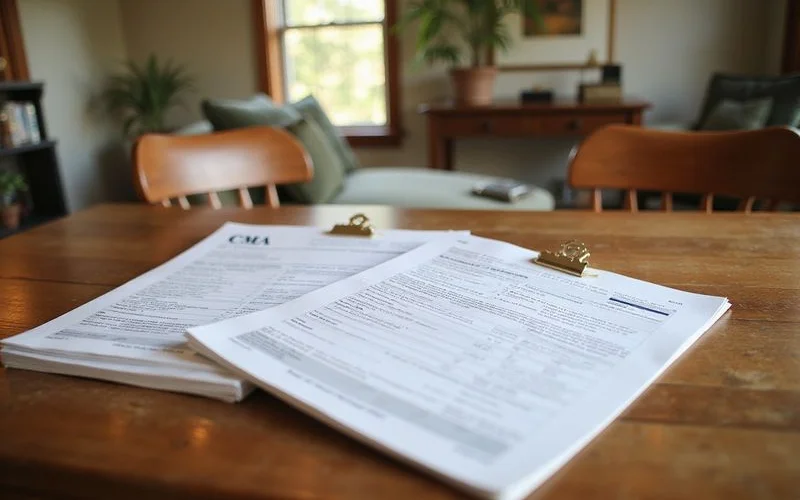
A comparative market analysis is a highly visual, easy-to-read document tailored specifically for the homeowner. We typically deliver a brief report featuring a summary of your property and a clear grid of adjusted comparable sales. It includes active listings, pending sales, and a customized seller net sheet that estimates your final take-home cash. Our agents write this analysis in plain English to help you plan your exact marketing strategy.
An appraisal, conversely, is a highly technical document created exclusively for the mortgage lender. We know that most residential appraisals use the Uniform Residential Appraisal Report Form 1004. This formal packet often runs between 10 and 30 pages long. Our local appraisers include a rigorous sales comparison grid, a hand-drawn floor plan sketch, and extensive neighborhood data. The document is dense and mathematical, designed entirely for bank underwriting rather than public marketing.
What the Appraiser Will Look At
During the mandatory site visit, the appraiser measures the exterior footprint and evaluates the interior condition. We instruct our sellers to treat this visit with the same level of care as a buyer’s final walkthrough.
The professional will check the mechanical systems, note any major upgrades, and take required photos of every room. Our team recommends a few simple preparation steps to ensure the highest possible valuation.
- Ensure the entire property is clean and fully accessible, including the attic hatch and basement utility rooms.
- Print a detailed list of recent updates, including exact completion dates and total project costs for items like a new roof or HVAC system.
- Allow your agent to politely hand the appraiser a packet of recent comparable sales that justify the contract price.
Your agent cannot legally pressure the appraiser to hit a specific monetary number. We do, however, have every right to provide factual data and receipts that support the home’s true value. Providing this information upfront is a normal, highly effective part of the process.
The Bottom Line
Reviewing a cma vs appraisal is a necessary step, but the market analysis is your primary tool for pricing a home competitively. We know that a formal appraisal is simply a banking requirement to secure the buyer’s mortgage loan.
The vast majority of typical home sellers only need a solid CMA to list successfully.
Our free valuation report provides an excellent baseline for any Mankato property owner.
Ryan can evaluate your specific situation and tell you honestly if a paid appraisal would actually benefit your sale. Reach out today to request your complimentary market analysis and take the first step toward a successful closing.

Realtor, Listing Agent, Coldwell Banker
Ryan Quade is a licensed Minnesota real estate salesperson with Coldwell Banker who has helped Mankato and South Central Minnesota homeowners sell for 20 years. He writes the Mankato Home Selling Guides on pricing, repairs, cash offers and estate sales for Sell My House Fast Mankato.
Credentials: Licensed Minnesota Real Estate Agent · Coldwell Banker affiliated agent