
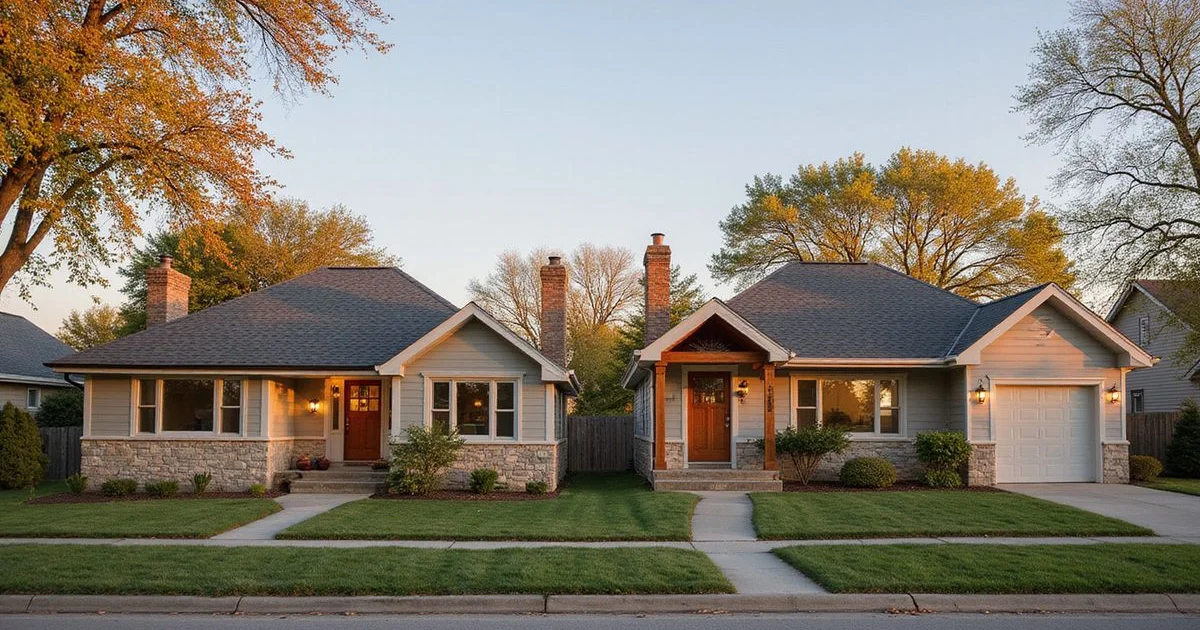
We often see sellers focus entirely on the final price tag, but the real story lies in the data used to build that number.
Comparable sales, or comps, form the backbone of any accurate home price.
Our team relies on this specific data to build a rock-solid listing strategy. Accurate data prevents a listing from sitting stagnant on the market.
We created this guide to show you exactly how are comps chosen for a house and adjusted, step by step, using real Mankato examples.
This exact method is part of the free home value report process used for every CMA.
The Goal: Homes a Buyer Would Compare With Yours
We always start by putting ourselves in the shoes of a potential buyer. A good comp is a property that a buyer shopping for your house would also seriously consider. Our goal is to find recent sales with a similar location, size, age, style, and condition. The closer the match, the less adjusting is needed, and the more reliable the price becomes.
We closely follow the strict guidelines set by Fannie Mae to ensure our pricing holds up to formal appraisal standards. The mortgage industry is updating its Uniform Appraisal Dataset (UAD 3.6) in November 2026, which forces appraisers to use highly dynamic, standardized condition and quality ratings. Our process mirrors these strict requirements so you do not encounter appraisal surprises later. For a standard city property, appraisers prefer to pull comparable sales from within a one-mile radius.
“Fannie Mae allows appraisers to expand the search distance to competing neighborhoods if recent comps are absent, but they must document the specific reason why in the final report.”
Step 1: Start in Your Neighborhood
We prioritize location above almost every other factor. Buyers think in distinct neighborhoods, not just general zip codes. Our experience shows that this distinction matters tremendously in the Mankato area. Crossing a major geographical barrier like Highway 14 completely changes the buyer pool.
We analyze these micro-markets carefully to ensure accurate comparisons. The median home value in Mankato reached roughly $285,000 in late 2026, but that number fluctuates wildly depending on the specific street.
Here is how location dictates value in our local market:
- Upper North Mankato and Lower North Mankato sell differently, even though they share a city.
- Lincoln Park Historic District century homes draw a different buyer than newer homes elsewhere.
- East-side Mankato homes compete with new construction near County Road 12.
- Homes near Minnesota State University may be valued partly as rentals.
- Neighborhood divisions: Entry-level homes near Tourtellotte Park simply do not compete with premium properties in the Hilltop area.
Step 2: Match Age, Style and Size
We filter the initial list of local sales to find homes that match your property’s physical characteristics. Appraisers typically look for a Gross Living Area (GLA) within a 15% to 20% variance of the subject property. Our agents exclude a 3,000-square-foot home when pricing a 2,000-square-foot property, even if they sit right next door to each other. The new UAD 3.6 guidelines require strict categorization of property condition (ranging from C1 for new to C6 for severe damage) and quality.
We evaluate these specific ratings to avoid mixing a recently updated home with a property needing major repairs. Here is a clear example of how filtering works:
- Year built: A 1920s home and a 2010s home are not comparable.
- Style: Two-story, rambler, split-level, and twin homes appeal to different buyers.
- Bedrooms and bathrooms: The utility of the space must align with buyer expectations.
We frequently see this play out in real life. A Lincoln Park Craftsman built in 1915 and a 2018 east-side two-story might have similar square footage on paper. Our agents know buyers for one rarely consider the other. They do not compare, so they should not serve as comps for each other.
Step 3: Check Recency
We place the heaviest weight on closed sales from the last three to six months. The Mankato real estate market shifted toward buyers in 2026, with inventory up 9.1% in the first half of the year according to KNOX Radio and Redfin. Our analysis of recent data from Minnesota Realtors shows statewide inventory hit a seven-year high in August 2026. This pushed local supply to roughly 3.5 months, meaning buyers have more choices and prices reflect a new reality.
We apply a specific market condition adjustment if we must use an older sale from early spring to price a home in the fall. Older sales only come into play when recent matches are completely unavailable.
“In a shifting market, a home that sold eight months ago requires a time adjustment to accurately reflect current buyer demand.”
Step 4: Adjust for Differences
We know that no two properties are perfectly identical. Comparable sales adjustments account for the specific differences between each sold property and your home. Our team uses local data to calculate a realistic value for each unique feature. For example, an extra garage stall in Mankato might adjust a property’s value by $5,000 to $10,000 depending on the neighborhood.
We always check the final closing documents for seller concessions. If a comp sold for $300,000 but the seller paid $6,000 in closing costs, the effective sale price was actually $294,000. Our adjustment process ensures these inflated headline numbers do not skew your target price. The table below outlines typical adjustment categories.
| Feature | Typical adjustment approach |
|---|---|
| Finished basement | Valued less per square foot than above-grade space |
| Garage stalls | Added or subtracted per stall difference |
| Bathrooms | Adjusted for full vs. half baths |
| Condition and updates | Kitchen, baths, roof, windows, mechanicals |
| Lot | Size, location, busy street, view |
| Seller concessions | Credits paid in the comp’s sale are backed out |

Step 5: Weigh the Results
We do not simply add up the adjusted numbers and divide by three. Appraisers and top agents use a weighted average to determine the final value. Our strategy assigns the highest percentage of influence to the most similar, recent sale located within a half-mile. A nearly identical home sold last month might carry 50% of the weight, while two older or more distant comps share the remaining 50%.
We present you with a suggested list price and a realistic range, rather than a single magic number. This approach accounts for normal market fluctuations.
- Proximity: Homes within a half-mile radius get top priority.
- Recency: Sales closed within the last 90 days carry the most weight.
- Similarity: Exact matches in style and condition anchor the final price.
Step 6: Check Against the Competition
We always cross-reference our adjusted comps with the active listings currently sitting on the market. Active listings show exactly what your potential buyers will view right after they leave your driveway. Our pricing strategy must account for the distinct advantage buyers hold when local supply expands to 3.5 months. If three similar properties are actively listed below your suggested price, buyers will naturally flock to the cheaper options.
We advise against pricing just a few percentage points above the competition, as this frequently causes a home to sit and accumulate risky Days on Market (DOM). If no competing homes exist in your bracket, the list price has more room to stretch.
“Active listings serve as a real-time reality check against historical sold data.”
Common Mistakes With Real Estate Comps Mankato
We see many sellers and inexperienced agents make critical errors when selecting data. The most common pitfall is calculating a generic price per square foot by mixing finished above-grade space with unfinished basement space. Our process strictly separates these two distinct areas. Here is a list of frequent errors to avoid:
- Using the highest sale on the street without adjusting for its specific upgrades.
- Mixing neighborhoods or crossing major highways that buyers see as different markets.
- Ignoring basement vs. above-grade space when calculating price per square foot.
- Forgetting concessions paid by the seller during the comp’s closing.
- Using list prices instead of actual closed sale prices.
- Exceeding standard adjustment limits, as lenders historically prefer total gross adjustments to stay under 25% of the sales price.
Special Cases
We encounter several unique property types that require a different approach. Standard rules must bend to accommodate unusual housing situations.
Twin Homes and Townhomes
Our team compares these properties primarily with other attached homes. Buyers typically shop for townhomes completely separately from detached houses. We carefully factor in the monthly Homeowners Association (HOA) fees. A high monthly fee impacts buyer purchasing power and requires a specific value adjustment.
Acreages and Rural Properties
Our search radius expands significantly when pricing rural homes with land. A tight one-mile radius rarely works outside city limits. We often widen the search across Blue Earth or Nicollet County to find matching properties. Adjustments for total acreage, outbuildings, private wells, and septic systems carry much heavier weight in these rural transactions.
Homes Near Campus
Our agents analyze single-family homes near Minnesota State University through a dual lens. Both traditional owner-occupants and investors actively purchase these specific properties. We often include rental properties with established cash flow as comparable sales. Financial metrics like the Gross Rent Multiplier (GRM) help confirm the underlying value for an investor buyer.
Historic and Unusual Homes
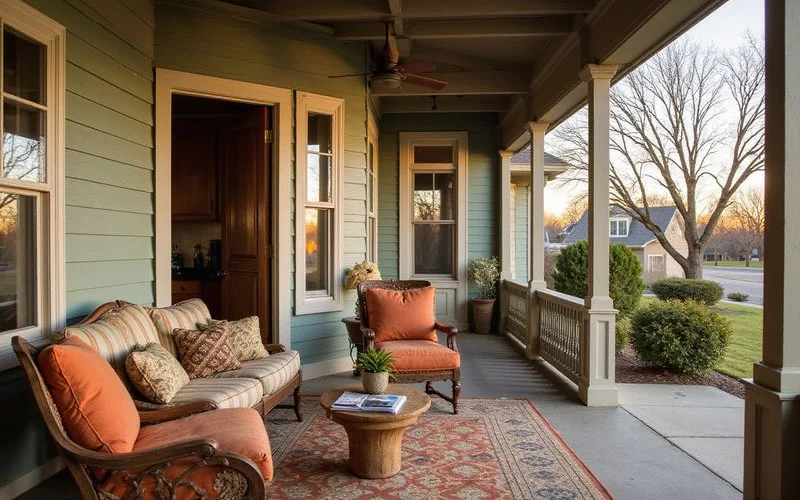
Our focus shifts to homes of the exact same era when pricing historic properties in Lincoln Park. Original features, deep porches, and custom woodwork add significant value for a specific buyer profile. We strongly recommend a pre-listing appraisal for highly customized, very large, or unusually small homes. This extra step provides confidence when standard comparables simply do not exist.
How Many Comps Are Enough?
We typically rely on three to six exceptional closed sales for a standard CMA. More data is not always better. Our team prefers three tightly matched comparables over ten loose, inaccurate ones. Fannie Mae appraisal guidelines require a minimum of three closed sales on the Uniform Residential Appraisal Report (URAR).
We follow this industry standard and support those closed sales with active and pending listings. If excellent matches are scarce within the last 90 days, the report must clearly explain the specific reasoning behind the final price.
“Three excellent, verified comparable sales always beat ten loose, inaccurate ones.”
Why You Should See the Comps
Our philosophy is that a suggested price is only as reliable as the data behind it. When homeowners review each individual property sale, they can add critical context. We value client input, as you might point out that a competing property backs up to a noisy commercial zone. This granular detail directly impacts the condition ratings and leads to a more accurate final number.
Our clients are encouraged to read what is a comparative market analysis to understand exactly how the full report is organized. Ryan’s written CMA shows every selected property and every specific adjustment, allowing you to check the math yourself.
Next Steps for Pricing Your Home
We treat accurate pricing as the most critical step in a successful real estate transaction.
Understanding how are comps chosen for a house gives you a massive advantage in the current market.
Our team is ready to run this exact detailed analysis on your specific property. Schedule a consultation today to review your customized market data and find the true value of your home.

Realtor, Listing Agent, Coldwell Banker
Ryan Quade is a licensed Minnesota real estate salesperson with Coldwell Banker who has helped Mankato and South Central Minnesota homeowners sell for 20 years. He writes the Mankato Home Selling Guides on pricing, repairs, cash offers and estate sales for Sell My House Fast Mankato.
Credentials: Licensed Minnesota Real Estate Agent · Coldwell Banker affiliated agent